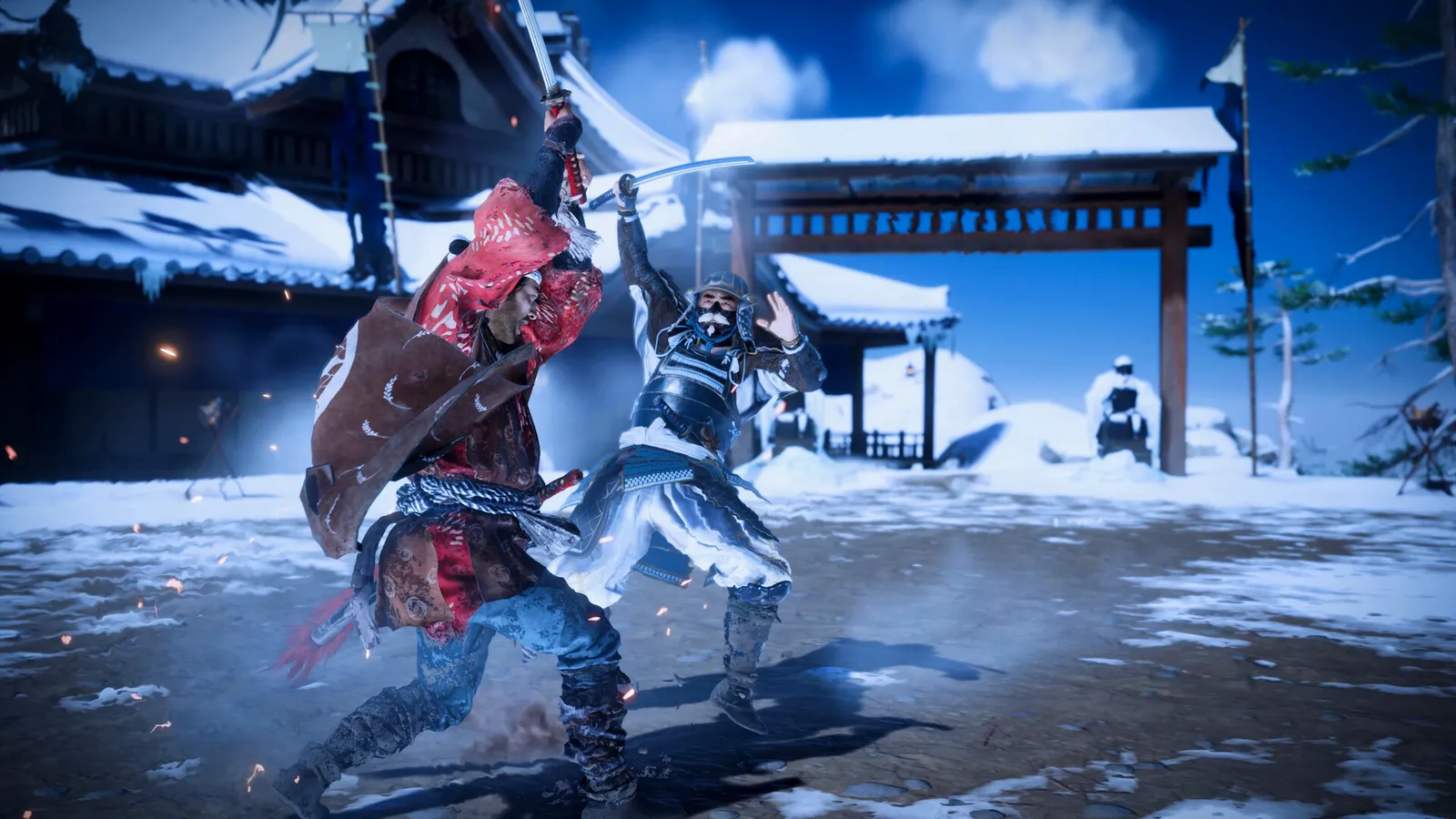
 Image: Sucker Punch Productions / PlayStation
No screenshot of Headbands yet. This one shows Kamiagata (Sucker Punch Productions / PlayStation).
Headbands
Headbands are cosmetic cloth bands for Jin, worn in the Helmet slot. Most come from composing haiku, exploring, tales and merchants, and each haiku spot gives one.
- Set
- Headbands
- How many
- 55
- Reward
- Cosmetic only
Good to know
- The game has 55 headbands.
- 19 come from haiku: 16 on Tsushima and 3 on Iki.
- 19 come from exploration, including one from the Forbidden Shrine.
- 6 come from tales and 9 from merchants.
- Merchant headbands cost 5 flowers, except the Pure Intent Headband at 20.
- One is earned by building your Legend on Iki.
How to get them
Haiku spots are the easiest source: sit, pick three lines and the headband is yours. Many exploration headbands sit on pagoda roofs at temples, so climb any pagoda you see. Norio's tales and two Mythic Tales give the tale headbands.
Finding them
Apart from haiku spots, headband locations stay off the map. Set the Guiding Wind to vanity gear or follow a Golden Songbird.
Vanity gear trophy
It is one of the 82 vanity gear pieces the game tracks across Tsushima and Iki, and gathering 30 of them counts toward a trophy.
- Iki IslandIki Island is the separate island southeast of Tsushima where the Iki Island expansion takes place. The Eagle Tribe under Ankhsar Khatun has taken it over, and Jin must face both the Mongols and his father's history there.
- IzuharaIzuhara is the southern region of Tsushima and the first one you explore in Act 1. It is where you rescue Lord Shimura from Castle Kaneda, meet most of your allies and learn the stealth tools that turn Jin into the Ghost.
 KamiagataKamiagata is the snowy northern region of Tsushima and the setting for Act 3. It is thinly settled and harsh, and it is where you chase Khotun Khan to his final stronghold at Port Izumi.
- ToyotamaToyotama is the central region of Tsushima, between Izuhara and Kamiagata. Act 2 plays out here: you rally allies, liberate Yarikawa and march on Castle Shimura, while side tales for Norio, Yuna and Yuriko open up.
Related collectibles
- Image: Sucker Punch Productions / PlayStationBamboo Strikes
Bamboo Strikes
Bamboo Strikes are button-timing challenges where Jin slices a row of bamboo poles. There are 20 in all, 16 on Tsushima and 4 on Iki, and completing them raises your maximum Resolve.
- Image: Sucker Punch Productions / PlayStationCharms
Charms
Charms are equippable trinkets that add perks to Jin, from extra health to silent arrows. You earn them from Shinto shrines, side tales and Legend ranks, and the six slots you can fill let you tune Jin for stealth, archery or swordplay.
- Image: Sucker Punch Productions / PlayStationDyes
Dyes
Dyes are colour variants for Jin's armor, bows and Sakai horse armor. Most come from merchants for flowers, others from tales, Wind Shrines, Sakai Banners or Baku in New Game+, and none change stats.
- Image: Sucker Punch Productions / PlayStationHaiku
Haiku
Haiku are short poems Jin writes at quiet, scenic spots on Tsushima and Iki Island. Each of the 19 open-world spots rewards a cosmetic headband, so this is where most of your headbands come from.